The Self-Running Prop Firm: Where Automation Actually Pays Off

Most operational pain in a prop firm is not a missing feature. It is a delay.
A trader requests a payout and nobody sees it until someone checks the queue. A funded trader stops trading and the team only notices when the inactivity rule is about to take effect. The owner's weekly numbers are rebuilt from an export that was already out of date when it landed in the spreadsheet.
The information is there. The event has already happened. It just has not reached the person or system that needs to do something about it.
At 500 funded traders, a team can keep a close eye on things. At 5,000, watching becomes a job in itself. At 20,000, asking people to keep checking dashboards, queues and reports stops being an operating model and becomes a race against volume.
So the goal is not to automate everything. It is to stop asking people to find the work.
Key takeaways
- Most operational cost in a growing prop firm goes on finding work rather than doing it: checking queues, assembling context, preparing decisions.
- A more scalable model is that the system notices what happened and gathers the context, and the team handles what needs judgement.
- On Axcera that is built from two things firms configure themselves: Event Triggers for the moment, and the API for the full picture.
- The decision stays human. The API informs and prepares the case, and the action happens in the platform, so permissions and the audit trail are untouched.
When prop firm growth creates more things to watch
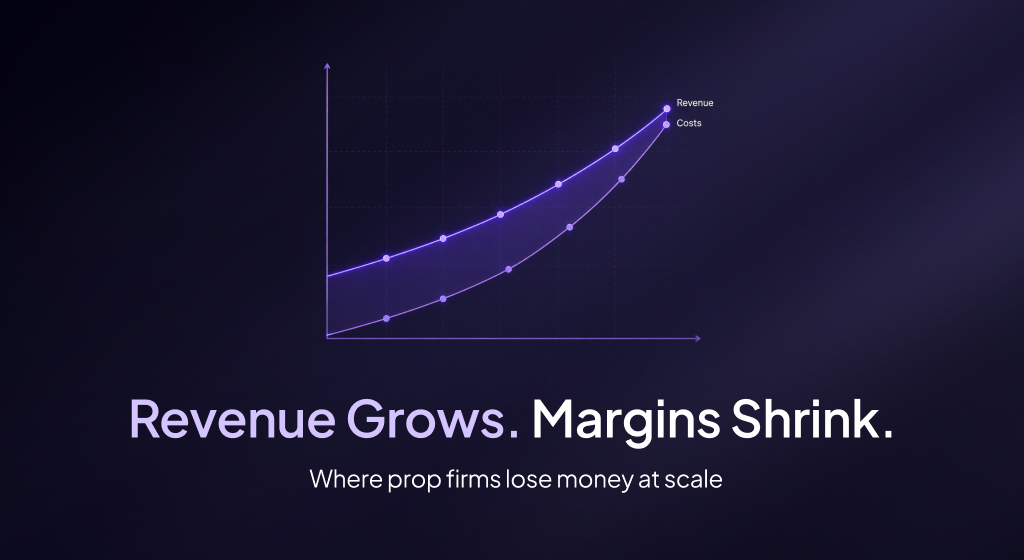
More traders means more payouts, more account events, more customer activity, more orders and more exceptions. The instinct is to solve that by adding people, and sometimes that is right. But there is a point where more headcount only keeps the same process alive. The team is still looking, checking, copying and assembling information before anyone can make a decision. That is the part worth changing, and it is one of the places where margins quietly leak as a firm scales.
A payout request does not need someone to discover it exists. A soft breach does not need someone to notice it in a table. Those are events, and the real work starts after them: working out what it means, deciding whether it needs attention, and getting it to the right person.
Stop checking. Start handling exceptions.
The model is simple. The system notices what happened. It gathers the context. The team handles what needs judgement.
Take payouts. The goal is not to approve them without people. It is to stop making someone manually inspect every request before they can decide whether it needs attention.
A routine request can arrive with the relevant information already assembled. An unusual one can arrive flagged, with the account history and supporting data attached. The person still makes the decision. They are just spending their time deciding rather than preparing to decide.
The system notices what happened. It gathers the context. The team handles what needs judgement.
What payout automation looks like in practice
Payout review is the clearest place to see it. Today every request tends to go through the same preparation whether it is straightforward or genuinely needs a closer look. Open it. Check the account. Verify the figures. Assemble what a reviewer needs.
That can be a different queue. When a payout is submitted, the event opens a case in your own operations system. The workflow then pulls what it needs from Axcera: the requested amount, the trader's share, any deduction and its reason, the method, the status history and the account the request belongs to. It can also bring in that account's current withdrawable profit and its trading activity since the last payout.
Routine requests then arrive already checked. Cases that need attention arrive with the information needed to investigate them. The team stops thinking about its workload as a number of payouts and starts thinking about it as the number of payouts that actually need them.
Note what did not move: the approval itself. The workflow prepares the case. A person still makes the decision, and the permissions and audit trail behind it are untouched. Everything before the decision is automated, and nothing after.
Two pieces make the workflow possible: Event Triggers and the Axcera API
The event: Axcera Event Triggers
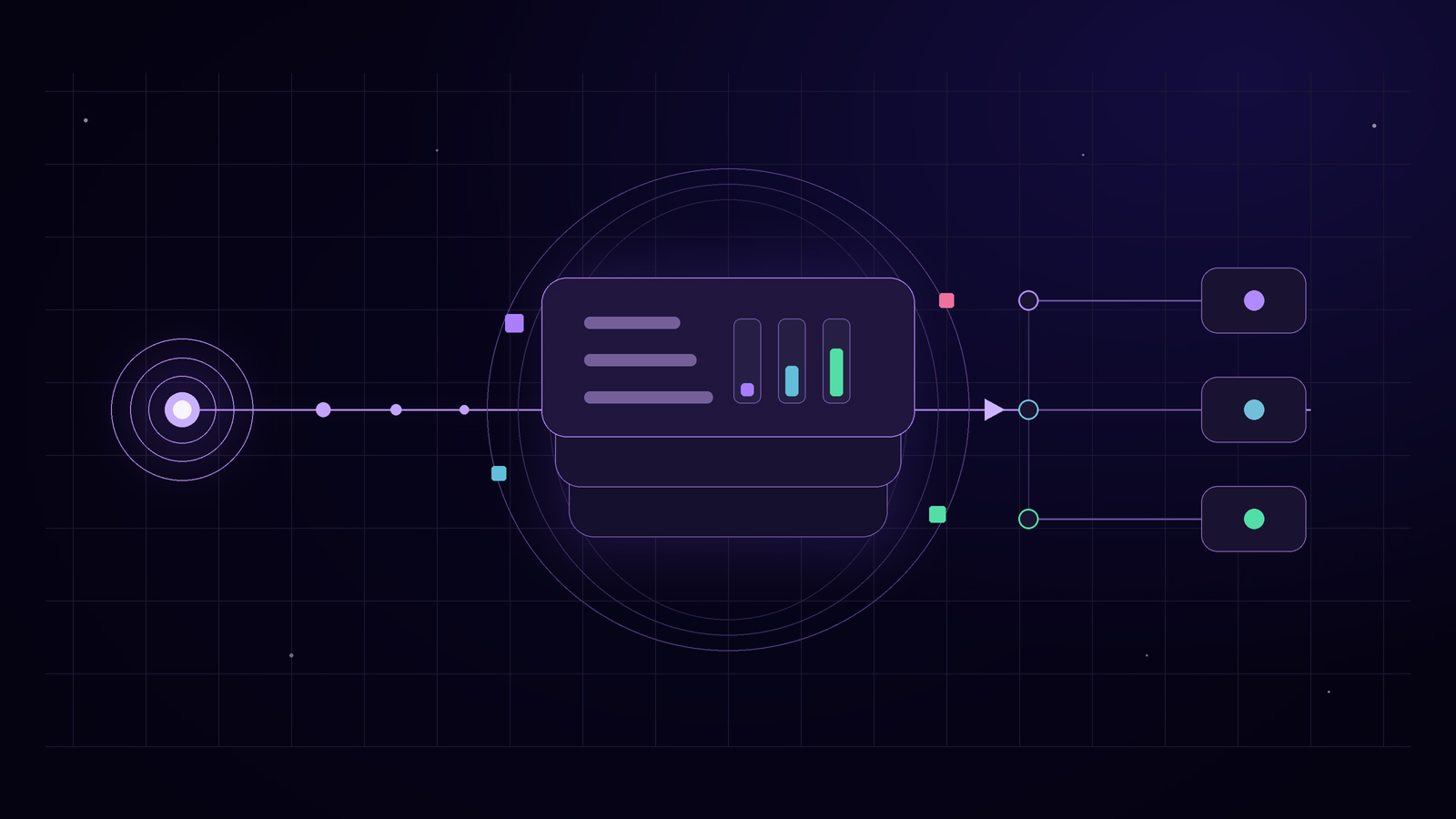
The first piece is the event. Axcera Event Triggers send a webhook when something happens in the platform. Your own administrators choose the event, decide which fields to include and supply the destination. Nineteen events are available across account changes, customer registration, payouts, orders and subscriptions, which covers multi-step challenges and instant-funding models alike.
The context: the Axcera API
The second is the context. The Axcera API gives your systems read access to the operational data behind those events: accounts with their rules and lifecycle, current account analytics, customers, payouts, orders and trades. It returns structured data, so the consumer can be a BI tool, a warehouse, an internal application, a spreadsheet or an automation platform.
Put them together and the pattern is straightforward. The event tells you when something happened. The API tells you what you need to know about it.
That is more useful than stuffing every possible field into every webhook. Keep the event small, an account reference or a customer email plus whatever the workflow needs to display immediately, and let the receiving system use that identifier to pull the current record. From there it can bring in account history, metrics, payouts or whatever the next step requires.
The rest is the firm's own workflow. It might be an internal application, a CRM or a reporting tool. It might start in Zapier, Make or n8n and grow into something more bespoke later. The important part is that the firm decides what happens next.
Where prop firm automation earns its keep
The best candidates are rarely the most complicated processes. They are the things that happen often, follow a recognizable pattern, and start with somebody checking something.
Support: know about the problem before the customer does
Payout rejections are the clearest example. When a payout is rejected, the trader should not be the first person to discover it. A rejection event can carry the reason, the amount and the customer into your support workflow, so the ticket is prepared before the trader asks for an explanation. Instead of reacting to "why was my payout rejected?", the team is already looking at the case.
The same idea works commercially. A failed or canceled order is a customer who was trying to buy. Feed those events into your sales workflow and follow-up happens while the intent is still fresh.
Risk: act on the signal, not the outcome
This is the part I would push back on hardest if someone handed me an automation plan.
Hard breaches are the normal outcome of a challenge model. Most traders breach eventually. So a hard-breach alert is not a signal, it is volume, and a workflow that pages somebody on every failed account produces a queue nobody reads. I have seen plenty of automation plans start here, because a breach feels dramatic. It is the wrong event.
The soft breach is the signal. Soft breaches fire from your own rule triggers and are far rarer, which is what makes them worth acting on. Combine a soft-breach event with the account's rules, current metrics and trading activity, and you can identify accounts approaching a threshold that matters, put them on a watchlist, and start a coaching process. It is also the last cheap moment in that account's life. A soft breach can be coached. A hard breach means the trader pays for a new challenge.
Management: stop waiting for the report
The same principle applies at the top of the business. Account analytics can return every active account with its current metrics: balance, equity, profit and loss, win rate, trading activity, withdrawable profit, and how close the account sits to its loss levels. A firm-wide view then updates on its own instead of waiting for somebody to rebuild it.
The benefit is not a prettier dashboard. It is that the numbers are there when the question gets asked. How many accounts are approaching a breach? How much profit is currently withdrawable? Those stop being requests for someone to prepare a report, which is how the weekly numbers every owner should track become a habit.
The same model, pointed at trader retention
The other half of automation is noticing opportunities the team would otherwise miss.
A retention team usually knows some funded traders are going quiet. What it lacks is a way to identify them early enough to act, and past a few thousand active accounts, checking manually is not realistic. Account analytics turns that into a daily list. Accounts approaching your inactivity threshold go on one list. Accounts that have built up withdrawable profit but have gone a long time without a payout go on another. Both arrive with the customer's contact details, so both can feed straight into a CRM: one group gets a re-engagement message, the other a reminder that they have profit available to withdraw.
The interesting change is the question the team can ask. Not "which traders are inactive?" but "which inactive traders are worth intervening with?" Given that the future of prop trading is retention rather than challenge volume, that is a materially better question.
What should stay human in an automated prop firm
Automation works best when the boundaries are clear. Some things are easy to describe in advance: a payout request needs the same basic checks every time, a completed order belongs in the same reporting workflow. Other things need judgement. A payout that does not fit the normal pattern. A breach worth investigating. A decision whose consequences justify a second look. Those should reach a person.
Today the API informs the workflow rather than acting on the platform, so the action itself stays where your permissions and audit trail already live. Payouts stay the firm's money, sent by the firm, on the firm's approval. Automate the detection and the preparation, and keep the judgement where judgement adds value.
There are also cases where the right answer is to hire rather than automate. The point is not to replace people. It is to make sure the people you hire spend their time on work that needs them.
Start with one workflow
Webhooks and APIs are not interesting on their own. What matters is what a firm builds with them, and the easiest place to begin is not the most ambitious process. Look at what your team repeatedly checks during the week. The payout queue. The soft-breach list. The Monday report. Failed orders. Inactive accounts. Then ask one question: when this happens, what does my team need next?
That answer is more useful than an integration specification. It is the same thinking behind running several markets from one platform, and the reason automation has become a competitive advantage in this industry rather than a nice-to-have.
A growing prop firm should not need more people simply because there are more things to notice. Let the system do the noticing, and let its people concentrate on the cases that deserve attention.
This is also where we are heading. Every release widens what a firm can run on its own, and the direction of travel is a platform a prop firm can operate as autonomously as it wants to, with us holding the data, the permissions and the guardrails underneath. What is described above is available today. It is not where this stops.
Because the most scalable prop firm is not the one with the most automation. It is the one where automation quietly handles the work that never needed a person in the first place.
Talk to Axcera about the workflow you want to automate. Book a demo.

.jpg)
.jpg)

.jpg)








.jpg)
.jpg)
.jpg)

%20(1).jpg)
.avif)