The Multi-Asset Advantage: Why Prop Trading Firms Are Adopting a Multi-Asset Model

The world of proprietary trading is evolving beyond single-market specializations. While many prop firms traditionally focused on forex or a particular niche, an emerging best practice is to adopt a Multi-asset model – a unified platform that supports multiple asset classes under one roof. In today’s competitive landscape, providing multi-asset trading opportunities isn’t just a nice-to-have; it’s becoming a key advantage for prop firms aiming to scale and differentiate themselves. Traders are seeking diverse opportunities, and prop firms that can meet that demand stand to gain a broader client base, increased trading volume, and more resilient revenue streams.
Meeting Trader Demand Across Asset Classesj
Traders come from various backgrounds: some excel in forex, others prefer the volatility of cryptocurrencies or the structure of futures and stock indices. If your prop firm only offers one type of asset class , you inevitably turn away skilled traders who are interested in other assets. By contrast, a multi-asset prop trading platform lets you “meet traders where they are” by supporting the instruments and trading styles they prefer. For example, a firm that offers challenges in forex, crypto, and futures can attract a wider range of talent than one limited to just forex.
The data underscores this growing demand. Interest in different asset classes has surged in recent years: futures trading in the prop context saw a staggering 5,500% increase in interest from 2020 to 2024, and other classes like stocks and crypto have also seen triple- or quadruple-digit percentage growth. Traders clearly want access to multiple markets. Prop firms that enable trading in a variety of assets position themselves as one-stop shops for these ambitious traders.
Offering multiple asset classes can also improve trader retention. A successful forex trader in your program might eventually want to try futures. If they can do that within your firm’s ecosystem, they are more likely to stick around rather than moving to a competitor that offers the new asset class. In essence, a broader asset menu keeps your top traders engaged by continually challenging them with new opportunities.
The Multi-Asset Model: All Assets, One Platform
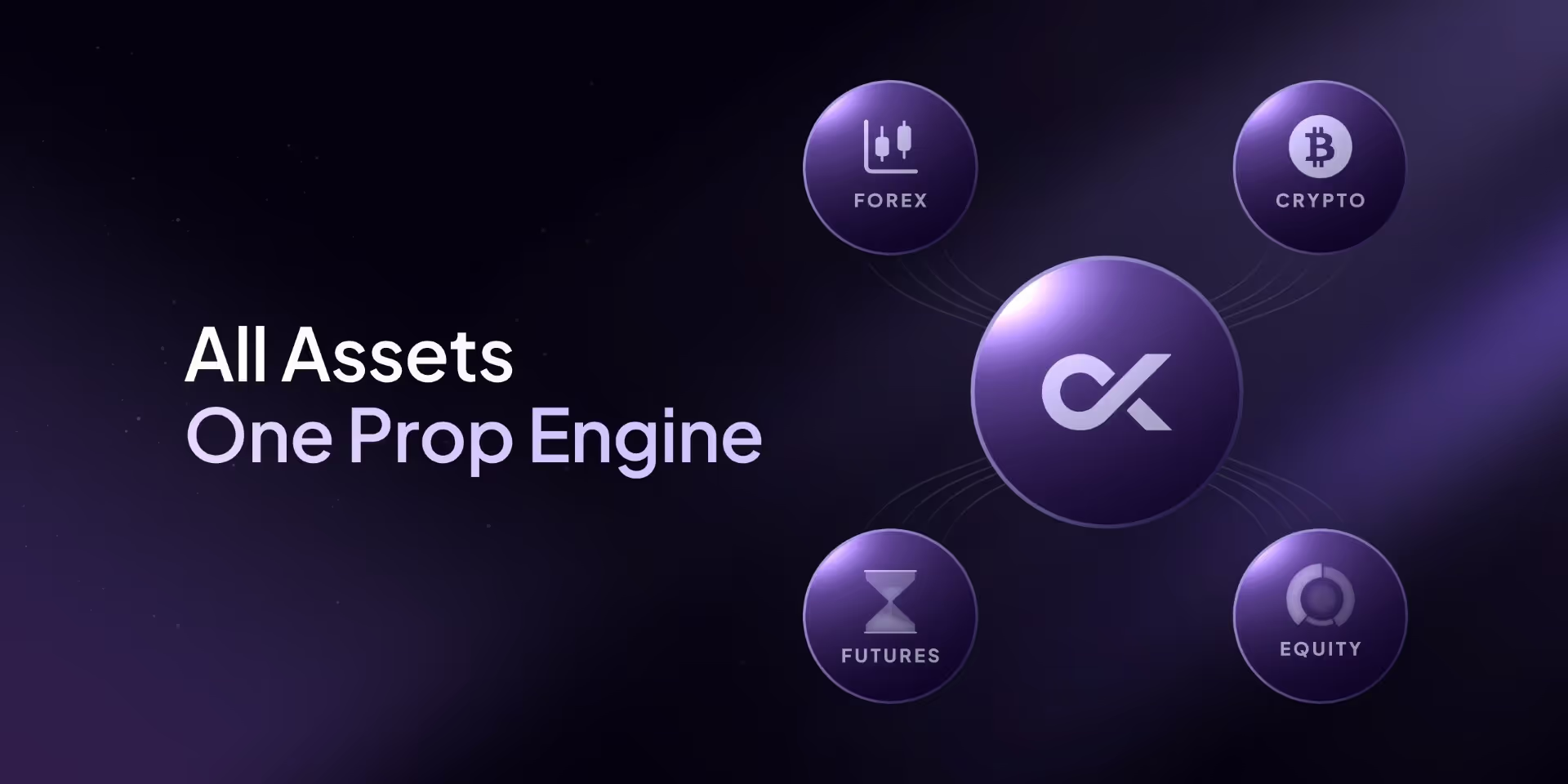
Adopting a Multi-asset model means running all your prop trading programs on a single integrated platform, even if they span different asset types. Historically, a prop firm trying to offer, say, both forex and futures would have had to juggle separate technology stacks, perhaps one set of software for the forex side and another for futures. This siloed approach creates complexity: multiple websites or portals, duplicate CRM systems, separate reporting, and fragmented user experiences for traders. It is inefficient for the firm and confusing for traders who have to navigate different systems.
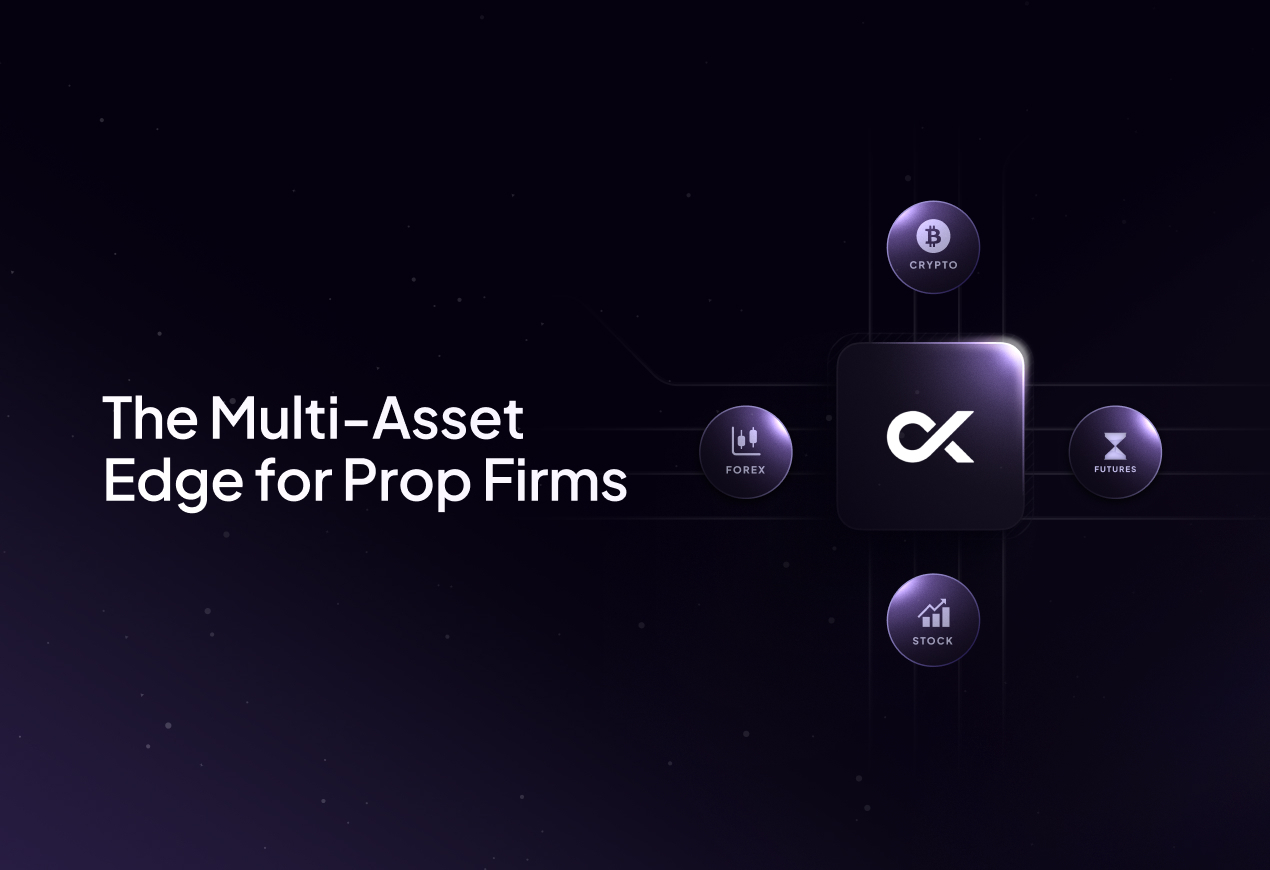
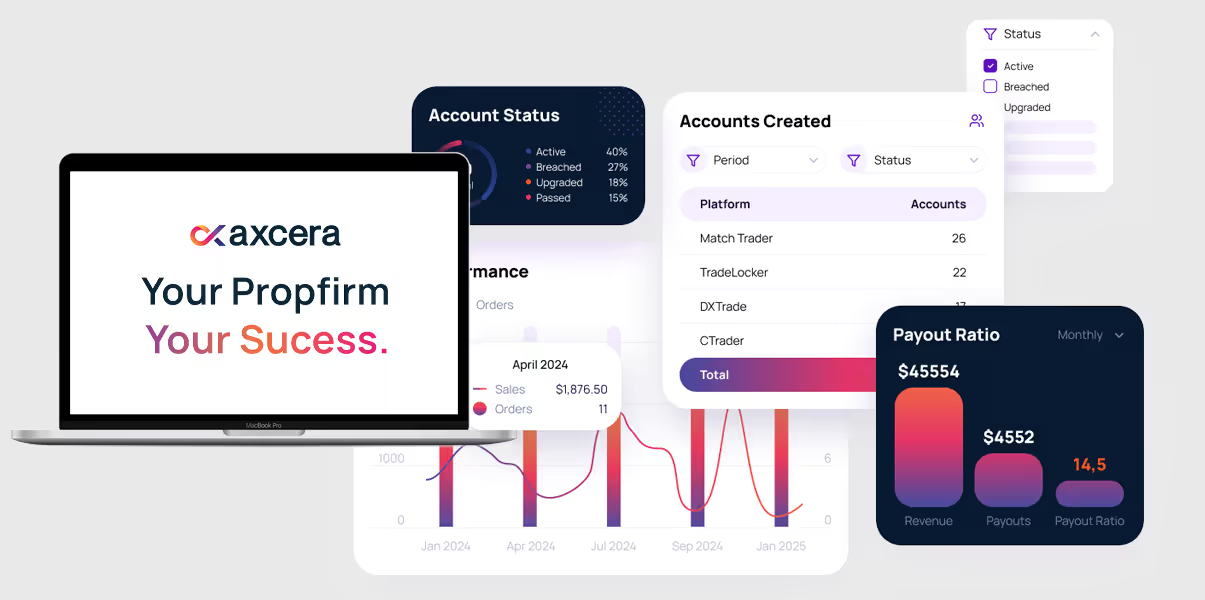
Modern prop trading technology has solved this through unified multi-asset platforms. For instance, Axcera’s Multi-asset Model provides a unified prop firm infrastructure that covers Forex, Futures, Crypto, Equities, and more in one ecosystem. There is no need to maintain parallel systems or manually consolidate data from different platforms. Traders log in to the same dashboard whether they’re trading EUR/USD or Bitcoin or E-mini S&P 500 Likewise, the firm’s staff manage everything from one admin backend.
The benefits of a unified Multi-asset platform include:
- Consistent User Experience: Traders get one coherent interface with your branding, and they can access all their accounts and results in one place. This consistency builds trust and brand loyalty.
- Simplified Operations: Your team has one set of tools for KYC, account creation, risk monitoring, and reporting that applies to all accounts firm-wide. Compliance checks and support processes are standardized, which reduces errors and operational overhead.
- Centralized Data & Analytics: All trading data flows into one database, giving you a holistic view of performance across asset classes. You can see, for example, how your forex traders vs. crypto traders perform, or aggregate risk exposure across all markets. These insights can inform better decision-making about your programs.
- Lower Costs: Maintaining one integrated platform is typically more cost-effective than licensing and supporting multiple different systems. You save on technology expenses and also on training time (since your staff only need to learn one system).
In summary, the Multi-asset model streamlines your prop firm’s operations dramatically. It allows you to scale up offerings without adding complexity. Many leading tech providers in the prop industry emphasize this “all-in-one” approach as the future of prop trading tech, combining diverse market access with unified management tools.
Diversifying Revenue and Risk
Multi-asset prop firms are not just catering to trader preferences, they are also building more resilient businesses for themselves. Different markets have different cycles and trading volumes. By diversifying into multiple asset classes:
- You can generate revenue from a variety of trading activities. For instance, if crypto trading fees or spreads slow down during a period of low volatility, your forex or stock trading programs might still be active to pick up the slack.
- The firm’s overall risk is more balanced. Market-specific downturns (like a prolonged forex lull or a crypto bear market) will not halt all activity at your firm, other assets may continue to see participation. This reduces reliance on any single market’s conditions.
- It opens up new partnership opportunities. A multi-asset firm can integrate with various broker liquidity providers, data feeds, or exchanges to get the best execution and trading conditions for each asset. Those relationships can enhance your firm’s reputation and offerings (for example, offering both exchange-traded futures and OTC forex through reputable partners).
From the trader’s perspective, a firm that shows expertise in multiple markets may also appear more credible and stable. It signals that you have a robust operation not tied to one niche. This can be a selling point in marketing to attract both traders and potential B2B partners (such as affiliates and influencers or educators who refer traders to your firm).
Implementation Considerations
Switching to or launching a Multi-asset model does require careful planning. Here are some considerations to ensure success:
- Platform Capability: Ensure the technology platform you use truly supports all the asset classes you want to offer. This means not just trading execution, but also appropriate risk monitoring for each (e.g., futures have different margins than forex, crypto trades 24/7, etc.). The platform should let you configure challenge parameters suitable for each asset type.
- Broker/Exchange Connections: Multi-asset trading means you will need connectivity to different execution venues. You might connect to forex liquidity providers, crypto exchanges, equity or futures brokers. Many prop tech providers have integrations ready for major venues (for instance, integration with MetaTrader for forex, with Rithmic or NinjaTrader for futures, etc.), so leverage those if available rather than building your own connections.
- Unified Rules and Fairness: If you offer different assets, ensure your overall program rules remain fair and clear. Traders should understand if certain rules differ by asset (for example, you might allow slightly higher drawdown on forex vs. futures due to volatility differences). Having a single platform helps enforce consistency, but you should still design your challenge rules to account for asset-specific factors while keeping the trader experience equitable across the board.
- Educating Your Team and Traders: Internally, your risk team and support staff might need training about the new asset classes you add. They should know the basics of how crypto trading or futures contracts work if they are going to support those traders. Externally, consider providing educational resources to traders who join one program and might want to try another. A forex trader venturing into futures with your firm will appreciate guidance on what is different (trading hours, contract sizes, etc.). This can increase their success rate and satisfaction, which is a win-win.
Conclusion
For prop trading firms with growth ambitions, embracing a multi-asset model can be a game-changer. It equips your business to attract a larger and more diverse pool of traders, keeps those traders engaged with fresh opportunities, and creates operational efficiencies that are hard to achieve with a patchwork of single-asset systems. The multi-asset approach, supported by an integrated platform, essentially future-proofs your prop firm, you can adapt as markets evolve and as trader interests shift, all without overhauling your infrastructure each time.
As the industry matures, it is clear that the firms thriving are those combining flexibility with coherence: flexible in offering a choice of assets, yet coherent in how they manage it all. Adopting a Multi-asset model is a bold step in that direction, positioning your prop firm not just to survive the changing landscape, but to lead it.
Explore a unified approach to multi-asset trading. Get in touch with Axcera to see how our all-in-one platform supports your firm in offering forex, futures, crypto, and more, seamlessly integrated for scale, control, and long-term growth.

.jpg)
.jpg)

.jpg)








.jpg)
.jpg)

.jpg)
%20(1).jpg)
.avif)