5 Warning Signs Your Prop Trading Technology Is Holding You Back

Many prop firms still operate on legacy systems that were designed for smaller volumes and slower workflows. As the industry grows, outdated technology becomes a direct obstacle to scale. The result is higher operational risk, slower execution, and missed revenue. In this article, we explain five warning signs that indicate it is time to modernise your infrastructure.
The Problem: When Technology Limits Growth
Prop firms often encounter a growth ceiling when platform limitations force manual work, slow updates, and complex rule changes. These issues appear minor at first, but they compound over time. Delays in payouts, inflexible product setups, and dependence on spreadsheets directly impact trader retention and operational efficiency. A modern prop firm needs infrastructure that adapts as fast as its trading volume.
Solution: Technology Built for Operational Scale
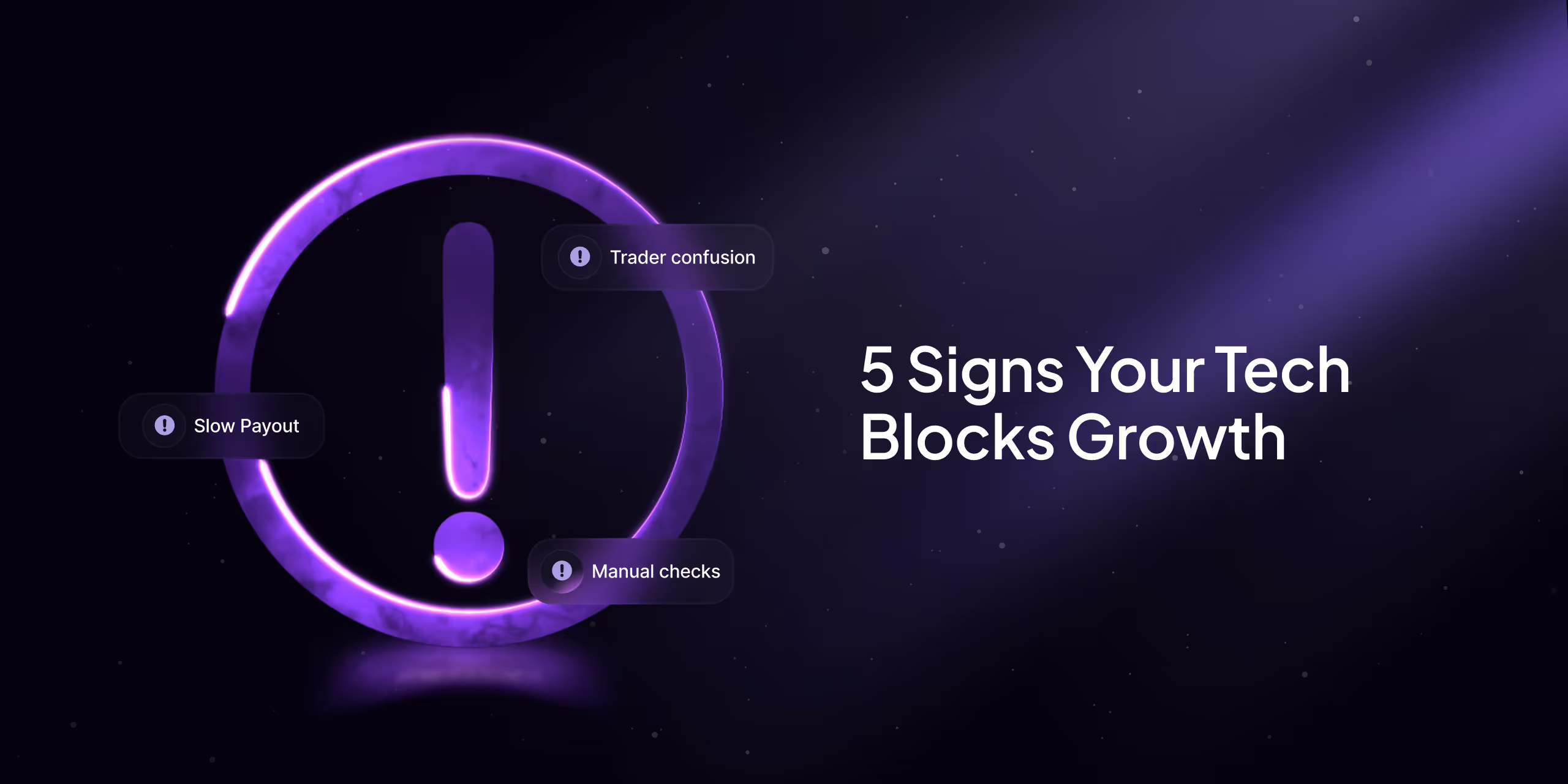
Below are five indicators that your current infrastructure may be restricting growth, followed by how modern systems resolve them.
Sign 1 – Rigid Rule Engine
- Feature: Traditional rule systems require developer support to change challenge stages or drawdown logic.
Value: Firms lose agility and spend valuable time on firefighting exceptions. - Feature: Rules are often hard-coded.
Value: Testing new phases or payout models becomes slow and costly.
Modern systems allow risk parameters to be updated in real time without code changes. Axcera’s risk tools configure profit targets, trader progression, and evaluation stages directly from the dashboard. This flexibility reduces time-to-market for new products.
Sign 2 – Heavy Manual Work Across Processes
- Feature: Spreadsheets and email alerts still manage risk or onboarding workflows.
Value: Each handoff increases delays and risk of operational error. - Feature: Key activities such as KYC, payouts, or account transitions rely on multiple tools.
Value: Staff spend time copying data instead of focusing on strategy.
Axcera automates trader evaluation, account setup, KYC checks, payout rules, and profit splits from a single system. This removes task switching and eliminates manual bottlenecks.
Sign 3 – Delayed Risk Enforcement and Limited Visibility
- Feature: Risk checks only run in batches or at the end of day.
Value: Rule violations can stay undetected for hours, creating unnecessary exposure. - Feature: High frequency trades or inverse trades are hard to capture manually.
Value: Firms react too late and struggle to contain loss.
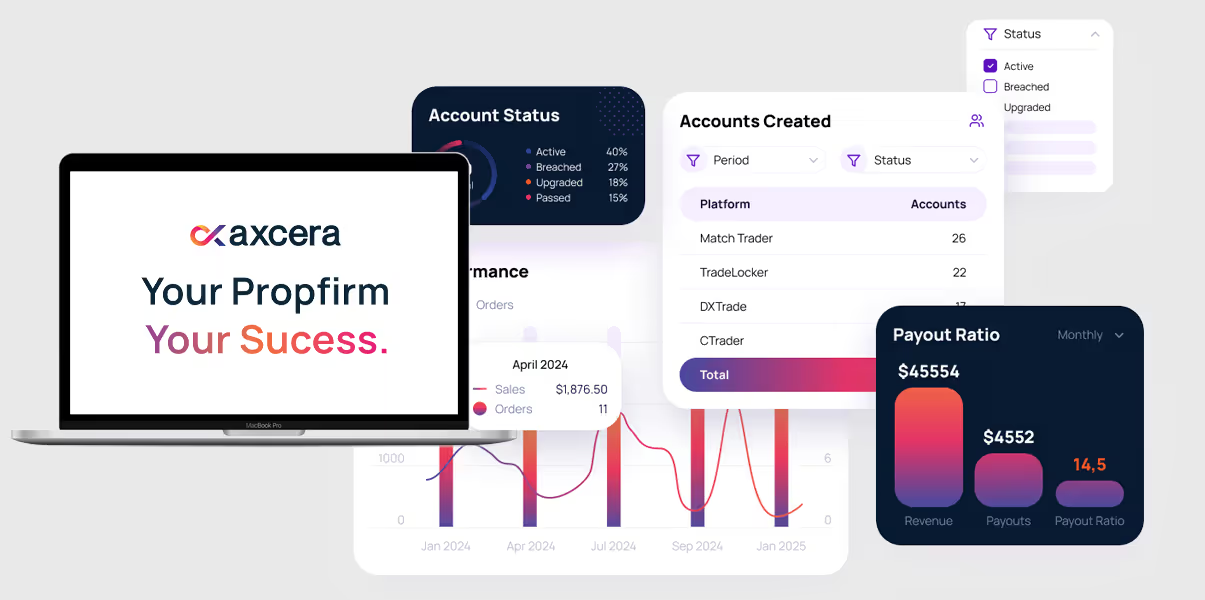
With direct connectivity to trading servers, Axcera runs real-time rule checks and flags irregular behaviour instantly. Risk alerts, pass or fail status, and trader analytics are displayed within one dashboard. Managers focus on exceptions rather than searching for issues.
Sign 4 – Hidden Costs and Vendor Dependency
- Feature: Some systems enforce profit sharing or broker limitations.
Value: Profit margins shrink, and firms stay locked into one provider. - Feature: Simple changes require paid development hours.
Value: Each update becomes an additional expense.
Axcera follows an open API approach and flat-fee model. Integration with multiple brokers and CRMs is supported. Firms avoid revenue sharing and can forecast costs with clarity.
Sign 5 – Trader Experience Becomes a Support Issue
- Feature: Traders cannot see their challenge status, profit target, or drawdown usage in one place.
Value: Confusion leads to unnecessary support tickets and lower trader retention. - Feature: Slow payout processes frustrate active traders.
Value: Trust declines and churn increases.
Axcera provides a clear trader portal that tracks every phase, balance, and rule status. Automated notifications reduce uncertainty and improve transparency across challenge stages. Firms report fewer helpdesk inquiries because traders understand their progress at all times.
How It Works
Axcera integrates with existing infrastructure through APIs and connects directly to trading platforms. Product configuration, account monitoring, trader onboarding, and payout workflows operate from one control panel. Rules are applied in real time, not in end-of-day batches.
Conclusion
If your current system is slowing onboarding, limiting rule flexibility, or producing support tickets, the platform may be working against your growth strategy. Infrastructure should help you scale, not create friction. Axcera provides a unified approach to risk management, trader evaluation, data visibility, and operational control. Firms that modernise early gain speed, transparency, and long-term cost efficiency.
Learn more about Axcera’s infrastructure approach here

.jpg)
.jpg)

.jpg)








.jpg)
.jpg)
.jpg)
%20(1).jpg)
.avif)